
Indian peacekeepers have rescued seven women from Mai Mai rebels in the North Kivu province of the Democratic Republic of Congo, which is often referred to as the rape capital of the world.
An Indian soldier on a United Nations peacekeeping mission in strife-torn Congo was killed during a firefight between the Congolese Army and armed assailants.
United Nations Secretary General Ban Ki-moon has expressed deep regret over the death of an Indian UN peacekeeper who was killed during clashes between renegade soldiers of Congo and government troops on the border with Uganda.

Official sources said the last case of monkeypox in India was reported from Kerala in March this year.
An Indian pilot was taken hostage by Congo rebels on Saturday when his aircraft was attacked at an airstrip in a mining zone in North Kivu province, according to media reports.Congolese authorities blamed Rwandan Hutu rebels for the attack. The aircraft belonged to Goma Express, which confirmed the attack. The identity of the Indian pilot could not be ascertained.Authorities said the rebels looted the money on board the aircraft and abducted the co-pilot.
A rescue team of sixth battalion of the Sikh Light Infantry, led by Commanding Officer Col S A Sharma, rushed along with all available officers and troops of the unit to the location to take control of the situation. The peacekeepers rescued six survivors from the crashed aircraft and evacuated them to the military hospital.

This comes amid a rapid surge in spread of the disease in Eastern Democratic Republic of Congo, and its detection in neighbouring countries as well.
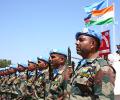
Three Indian peacekeepers, who lost their lives serving under the UN flag last year, are among the 103 military, police, and civilian peacekeepers who will be honoured posthumously with a prestigious medal in the United Nations for their service and supreme sacrifice in the line of duty.

Last week, two BSF troopers from Rajasthan, members of the UN Peacekeeping Force in Congo, were killed by protestors. Do we need to lose lives fighting in a country not ours, in a war that is not ours and for a cause that is not ours, asks Air Commodore Nitin Sathe (retd), who served in the UNPKF in Congo.

Driven from its self-styled caliphate in Iraq and Syria, Islamic State is down but not out. Where once they confronted armies, the extremist Islamist group's adherents have now staged hit-and-run raids and suicide attacks. In some cases, the group has claimed responsibility for atrocities, including the bombings of churches and hotels in Sri Lanka that killed at least 253 people. Its involvement is not always proven, but even if the link is ideological rather than operational, Islamic State still poses a security threat in many countries.
